

Revision Nose Surgery Specialist | San Diego Revision Rhinoplasty Surgeon
Revision rhinoplasty is an advanced procedure that requires highly sophisticated training, expert techniques and the hands of a specialist. The best revision rhinoplasty surgeons in San Diego will have experience using rib and ear cartilage to rebuild the nose. Dr. Kolstad is a double board-certified Facial Plastic Surgeon in San Diego specializing in revision nose surgery.
If you did not achieve the results you wanted with your first rhinoplasty, it is important to do your homework before deciding on a revision. In our practice, we frequently meet with patients that are unhappy with their rhinoplasty results.
It is common to see noses that are crooked or asymmetric, pinched nasal tips and ski slope bridges. During your consultation, Dr. Kolstad will develop a unique strategy designed to address your concerns and meet the needs of your nose.
Revision rhinoplasty tends to be far more challenging than a primary rhinoplasty surgery for a variety of reasons. Revision nose surgery requires an ability to understand both the original structure of your nose and the alterations made during your initial nose surgery.
Patients who have undergone nose surgery in the past will have scar tissue which will increase the complexity of the procedure. In addition to scar tissue, the cartilage that was removed to reshape a nose during the first surgery will no longer be available.
While a dissatisfying outcome in nasal cosmetic surgery is possible even in the most skilled hands, more commonly it comes from the hands of the occasional nasal surgeon. Revision rates with inexperienced physicians have been reported to be as high as 20%.
The decision to have a revision surgery can be a difficult and often emotional one. Dr. Kolstad believes in approaching the procedure as your partner. He works with you to ensure that all of your concerns are discussed and that he clearly understands your goals. Dr. Kolstad believes that those seeking revision surgery need to be advised honestly about what they can expect.
Dr. Kolstad’s analytic approach distinguishes him from his colleagues. He believes in a customized approach that is specific to the way that your nose will harmonize with your face. Dr. Kolstad learned his technique from one of the best rhinoplasty surgeons in the world. He spent an entire year in New York working exclusively with one of the world’s premier Facial Plastic Surgeons.
“You do not learn plastic surgery from a book or by watching a video. You learn to become the best rhinoplasty surgeon by working with the best rhinoplasty surgeons.”
Revision nasal surgery is more challenging than primary rhinoplasty for several reasons. Scar tissue and weakened, asymmetric cartilages are the main obstacles encountered in revision nose surgeries.
Dr. Kolstad prefers an open approach to the nasal framework. With this technique, incisions are primarily located inside of your nostrils, with only a small incision placed across the columellar skin, the vertical strip of tissue between your nostrils. View our rhinoplasty Before and After gallery to see high-definition examples of healed rhinoplasty scars.
The open approach allows for a direct view of the nasal structures leading to a more predictable result. Dr. Kolstad will use cartilage from your septum, (possibly ear or rib in revision cases) to enhance the definition of your nose and to provide support.
You can choose to reduce or increase the size of your nose, change the tip or the bridge, narrow the span of the nostrils or change the angle between your nose and your upper lip.
Dr. Kolstad will evaluate the structure of your nose in relation to the shape of your face, the thickness of your skin, your height and your age. He will work with you to try to make your nose complement your other facial features.
Revision Nose Surgery Cases in San Diego CA
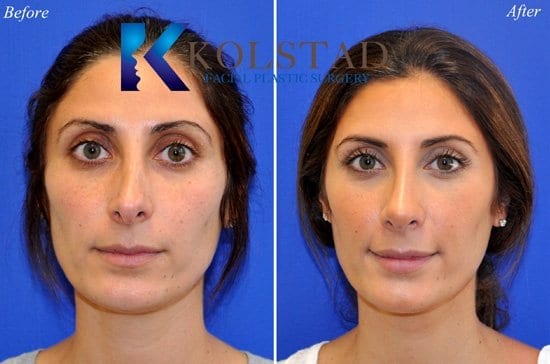
Case #1.
This patient did not like the shape or proportion of her nose. She had a rhinoplasty in the past and was unhappy with the results of her nose surgery. She felt like the bridge was too scooped on profile view. She was concerned that the tip of her nose was asymmetric and looked unnatural. She had difficulty breathing through her nose.
Men’s Revision Rhinoplasty San Diego
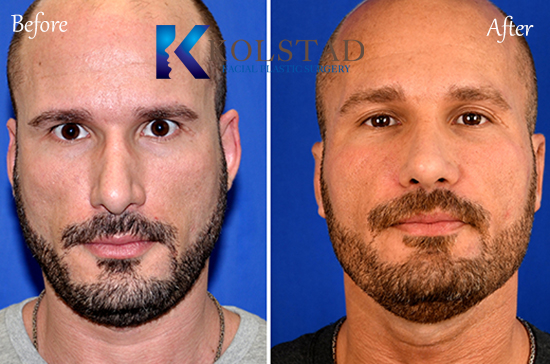
Case #2.
This patient sought revision rhinoplasty in San Diego. He was unhappy with the results of his previous surgery and was looking for a revision rhinoplasty expert in La Jolla. He was concerned about a bump on his bridge after rhinoplasty. He did not like the unnatural shadowing from the bridge-tip contour. Dr. Kolstad used rib cartilage to rebuild and support his nose. Men’s revision rhinoplasty should create a strong, masculine nose without over lifting or pinching the tip.
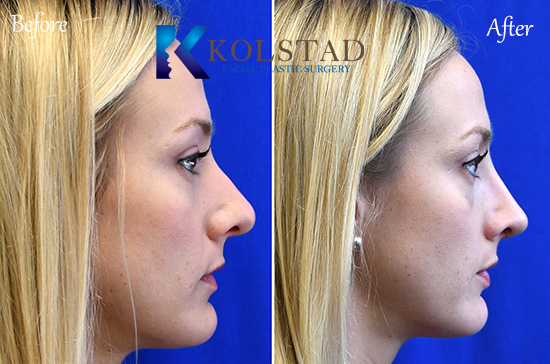
Case #3.
This women sought revision rhinoplasty in San Diego. She had rhinoplasty years ago by a different surgeon. She did not like how wide her tip was. She felt like the bridge of her nose was to large. She thought her the size of her nose was out of proportion to her other facial features. Dr. Kolstad used rib cartilage to reshape her nose. Revision rhinoplasty is much more complicated that primary surgery. Dr. Kolstad will frequently need rib cartilage to rebuild the nose and reverse many of the previous changes.
Out Of Town & Fly In Patients
Our Team Will Plan Some or All of Your Surgery Experience
Patients from around the country and many times around the world seek Dr. Kolstad’s expertise in revision rhinoplasty. If your results did not meet your expectations with your first or multiple previous rhinoplasties it is important to find the right surgeon. Dr. Kolstad offers both in person and virtual consultations for patients not in San Deigo.
Don’t worry about traveling to see Dr. Kolstad from a different part of California, a different state or a different country. We are here to make your visit to San Diego an enjoyable and genuine experience. Let us take the stress out of travel so you can focus on your surgery and recovery.
A dedicated staff member will work with you to arrange as much of your trip and surgery experience as you require. Let us know if we can assist with any of the following:
– booking private or commercial flights.
– arranging ground transportation from the airport to your hotel.
– reserving lodging.
– overnight nursing services.
– restaurant reservations and more
If you would like to utilize our Patient Concierge Services to arrange your travel plans, please call to speak with our patient concierge at (858) 859-2563
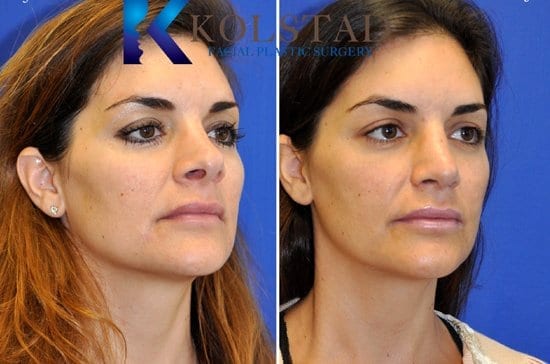
Case #4.
This patient did not like the results of a previous nose surgery. She was concerned that the tip of her nose was too rotated creating an unnatural nostril flare. She felt like the bridge was too scooped on profile view. She was concerned that the tip of her nose was asymmetric and looked unnatural. She had difficulty breathing through her nose.
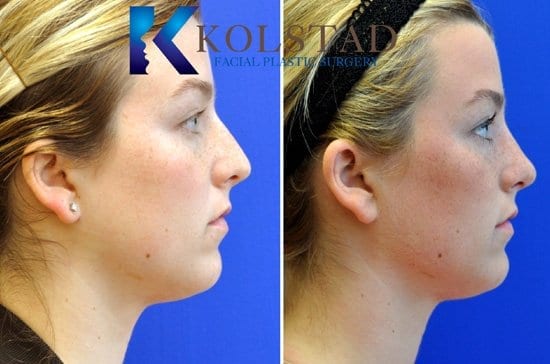
Case #8.
This patient had a rhinoplasty surgery several years ago. She was concerned the results of her first nose surgery. She felt like she had a bump on the bridge of her nose. She was concerned that the bridge of her nose was deviated on the front view. She was concerned that the tip of her nose was asymmetric and looked unnatural. She had difficulty breathing through her nose.
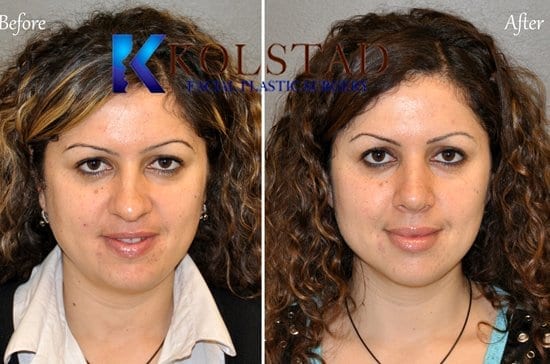
Case #10.
This patient had two rhinoplasty surgeries and was concerned with the outcome. She had difficulty breathing through her nose and did not feel like her previous rhinoplasties created a refined appearance. She was concerned with a bump on the bridge of her nose. She did not like the tip of her nose thinking that it was asymmetric and looked unnatural.
Frequently Asked Revision Rhinoplasty Questions
The rhinoplasty cast will stay on for one week. After removal of the splint, your nose will be a little swollen and “puffy”. However, even when swollen, your nose will look better than it did before surgery.
It takes two to three weeks for the majority of swelling to be reabsorbed from your nose. As the swelling is removed, your nose will become more contoured and the definition will enhance.
It takes a full 12 months for 100% of the swelling to be completely gone. The nasal skin must shrink-wrap to the new framework and definition. This takes time. Throughout the postoperative period, Dr. Kolstad will use medicines to contour the nasal skin and enhance your result.
It is common for some bruising under your eyes. With frequent use of ice packs the bruising is typically minimal and does not bother the majority of people. Dr. Kolstad recommends that his patients obtain cover-up make-up prior to surgery to help camouflage any postoperative bruising.
A frequent concern of our patients is looking plastic after rhinoplasty. There are limitless examples of unnatural, operated results. When surgeons remove too much structure, the nasal tip can look overly narrow.
It is very important to choose a plastic surgeon that specializes in operating on the face. Dr. Kolstad is an expert in nasal cosmetic surgery and is known as the face specialist, because put simply, that is all he does.

Dr. Kolstad – Double Board Certified Facial Plastic Surgeon
 Rhinoplasty Before and After Surgery Instructions
Contact Us
If you are interested in revision rhinoplasty in San Diego, La Jolla and surrounding areas, contact us today to schedule a revision nose surgery consultation. Call us at (858) 859-2563 or get in touch with the form below.